Diving into the world of sewing feels like embarking on a creative journey where every stitch tells a story. As a novice, excitement can sometimes collide with common pitfalls such as loose basting threads, misplaced pins, or wobbly seam starts.
This article will walk you through simple yet essential techniques—from proper needle placement to using seam guides—so that your first projects turn into stitching triumphs.
Using Basting Thread Effectively for Easy-to-Adjust Seams
If you have already basted the seams, do not stitch on top of the basting stitches. Instead, stitch on the seam allowance right next to the basted seam. This will make it easy to remove the basting stitches and the garment will not be too tights, as basted seams tend to loosen a bit during fittings.
Sewing Without Basting: Pins Are Your Best Friends
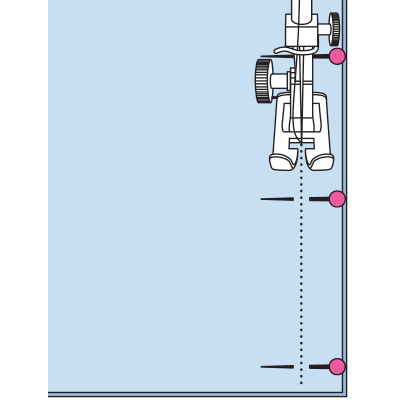
You can do without basting if you pin straight pins at a 90° angle to the seam. If you stitch slowly over them with the machine, the machine needle will not break.
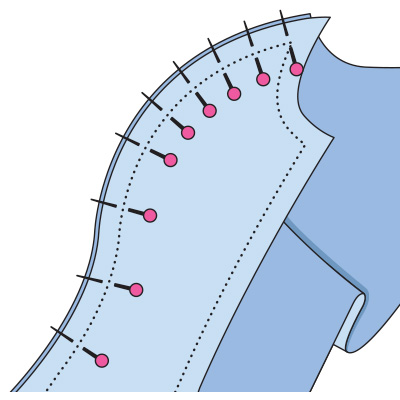
For curved seams, you can also do without basting if you pin straight pins at a 90° angle to the seam line such that they are inserted exactly on the seam line and come out on the seam allowance as close the to where they were inserted as possible.
Before stitching, from the right side you can also check to make sure that the fabric layers are flat without any folds or puckers.
How to Handle Stops and Corners While Sewing
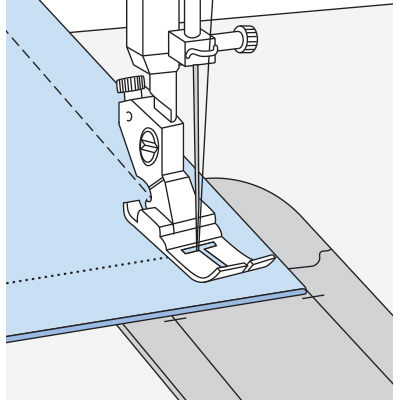
If you have to stop stitching in the middle of a seam, make sure that the needle stays in the fabric.
At corners, keep the needle in the fabric exactly at the corner, lift the presser foot and rotate the fabric around the needle. Lower the presser foot and continue stitching
How to Avoid Knots and Loops at the Start of Sewing
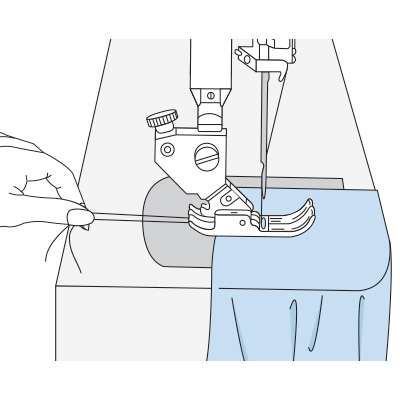
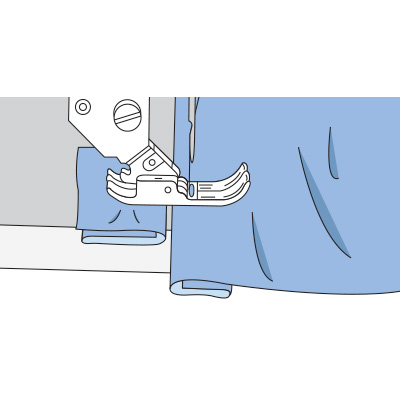
To ensure that loops and knots do not form at the beginning of a seam, hold the thread ends together or first stitch across a small doubled piece fabric. Place the piece of fabric under the presser foot, right next to the fabric to be stitched. Stitch the seam, backstitching to secure the beginning of the seam.
Now cut off the piece of fabric and at the end of the seam, place it under the presser foot right next to the fabric being stitched. Remember to backstitch to secure the seam end before stitching across the piece of fabric.
Tips for Sewing Straight and Keeping Seams Even
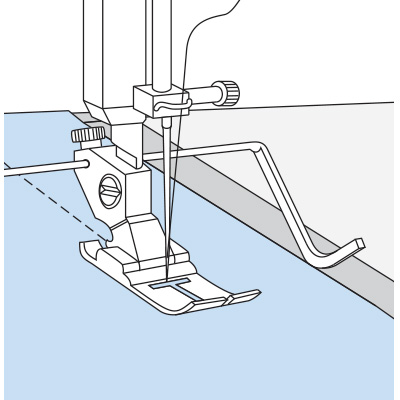
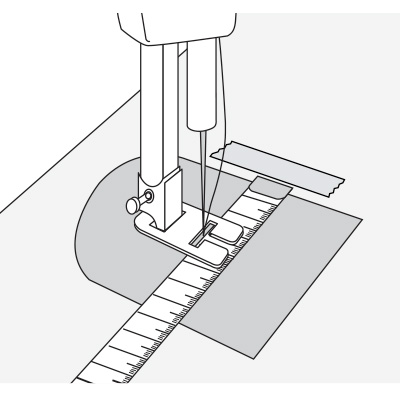
You can stitch at the exact distance to an edge if you set the required seam width on a walking foot, also called a quilt guide, (consult your sewing machine manual for detailed information). You can also use a piece of tape to mark the distance on the sewing machine. Measure the required seam width from the needle to the right side and place a piece of brightly coloured tape there. Guide the fabric along the tape edge when stitching.
On some throat plates (the metal piece beneath the needle), vertical scores are located at various distances from the needle.
By weaving these tricks into your workflow (from thoughtfully pinning to mastering your seam guide) you’ll turn every sewing hurdle into a moment of triumph.
Your stitches will gain elegance as you gain confidence, and before long, your projects won’t just be experiments but cherished creations you’ll eagerly share with everyone.
And for all sewing basics and beginner-friendly patterns in one single book: